Securing and Supporting: What You Ought to Know
A fencing is meant to look solid from across the yard, yet the genuine story takes place listed below that quite leading rail. When a fencing leans, spreads, or begins to sag a year after install, it is seldom because the contractor "picked the wrong design." More often, the failures map back to anchoring and supporting, meaning just how the messages are safeguarded in dirt and just how the fence resists lateral force.
If you have actually ever watched a fence slowly bow after the very first hefty wind period, you recognize the pattern. The messages do not just move as soon as. They move a little, then extra, because the system is missing tightness and proper restraint. Securing and bracing are what transform a set of posts and panels right into a framework that holds its shape.
Let's talk like the people who actually build these fencings do, with information you can use to evaluate quotes from a fencing company, ask sharper questions of a fencing contractor, or discuss the issue when a fence company returns for repairs.
The pressures that break fences
Most fence failures are not arbitrary. They follow physics.
Wind pushes laterally. People climb and lean. Snow drifts and knocks. Fence gates act like bars. Even thermal movement and ground shrink-swell cycles can stress a fencing when the blog post spacing and restriction do not match the site.
An usual mistaken belief is that the articles just "hold the fence." In reality, posts resemble columns, and a fence resembles a long structure. If the fencing lacks supporting, the structure guides. If the blog posts are not secured appropriately, the structure can equate at the ground line, then the whole run begins to open up.
Think regarding a run of panels with no angled resistance. Even if each article is set in respectable concrete, the fence still acts like an adaptable ladder. Once the top rail or the panel link loosens, the whole run can rack sidewards until it discovers a brand-new stability. That new equilibrium is typically ugly.
Anchoring: greater than "established blog posts in concrete"
Anchoring is the connection between the message and the ground. People argue about concrete quantity and depth, but what matters is the consolidated system: blog post embedment, concrete high quality, soil conditions, and water management.
Embedment depth and why it obtains misquoted
Many fencing agreements reference conventional midsts like "2 feet" or "three feet." The real problem is whether that depth provides adequate resistance to side forces for your specific dirt. Sandy dirt behaves differently than clay. Frost conditions alter what the ground can do over time.
In frost-prone regions, the worry is not just that the fence will certainly be pressed out by freezing. Frost heave and thaw cycles can move articles discreetly. Subtle changes end up being misalignment. Imbalance becomes stress and anxiety on bolts and rails. Bolts fall short, and after that the fence begins to look "low-cost" also if the products are fine.
If you are working with fencing contractors or vetting a fence company, request for a description tied to your dirt. An experienced fencing contractor need to be able to speak about regional dirt type and water drainage, not simply generic embedment.
Concrete: great defeats more cement
Concrete is not instantly "stronger since it is thicker." Overpoured concrete can likewise be disadvantageous if it catches water around the message in the incorrect way, or if the opening is filled up without proper prep work. A careless hole with loosened dirt at the boundary develops channels where water can move and freeze, after that lift.
Concrete positioning quality matters:
- The opening must be prepared so concrete calls undisturbed soil.
- The article should be set plumb and held while the concrete sets.
- The concrete should be completed so water does not kick back the blog post in a way that speeds up freeze-thaw deterioration.
I have actually seen fences where articles were merely gone down into a rough auger hole and put. They held for a period, then the fencing began to lean towards the first major wind. When you collect among those messages later, you frequently discover a messy interface, not a secure base.
The ground line is where movement begins
Even when embedment is proper, motion frequently starts at the base. Soil can warp around the blog post under side lots. That is why bracing exists. https://sgp1.digitaloceanspaces.com/sawdustsite/timber-fencing/finest-practices-for-timber-paling-fencing-installation-in-2026.html It decreases the minute the blog post experiences by dispersing tons into rails and throughout the run.
If the fence is braced well, the message experiences less side bending, so the anchoring system lasts longer. If supporting is missing, even a solid collection can be "overworked" over time.
Post material and corrosion likewise change anchoring outcomes
Pressure-treated timber, metal posts, and composite or plastic systems can all stop working, but they fall short in different ways. Timber messages can rot at the ground line if water rests versus them. Steel posts can wear away at or near the embedment if coating and water drainage are poor.
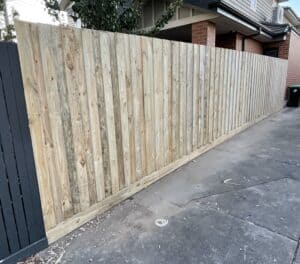
Anchoring is additionally regarding detailing. A post that is a little above quality with a proper crushed rock shoulder can last a lot longer than one buried where water collects. A fence company that treats the base as a second thought is wagering with the service life.
Bracing: stopping racking prior to it starts
Bracing is what transforms a row of messages right into a stable line. It is the difference in between "a fencing" and "a fence system."
In technique, bracing is generally regarding:
- How end, corner, and gate blog posts are reinforced
- How the fence framework resists diagonal movement
- How rails and blog posts are linked so the entire run works as one
If you picture a fence run like a long rectangular shape, supporting is the angled or tight participant that protects against the rectangle from becoming a parallelogram. Without it, the fence racks.
End, corner, and gate articles are the real battleground
Most individuals concentrate on the basic line articles and forget the end conditions. But in wind, the fence experiences bending minutes around the ends, corners, and gateway openings. That is where supporting demands to be strongest.
Gate openings enhance forces because entrances swing and due to the fact that the joint side sees repeated lots cycles. An entrance that bangs, or even a gateway that is made use of greater than expected, can loosen connections and pull the entire area out of alignment. Bracing decreases the leverage that an entrance creates.
If you are comparing bids from a fencing contractor, this is where you ought to demand quality. A "exact same blog post size almost everywhere" layout can be great in some situations, yet end conditions often need heavier components or added diagonal members.
Diagonal bracing and rail rigidity matter
Bracing can be completed through angled participants, more powerful rails, tensioned cord systems, or particular brace and fastener designs. The specific technique relies on fencing design and products, however the concept stays the same: stand up to side movement.
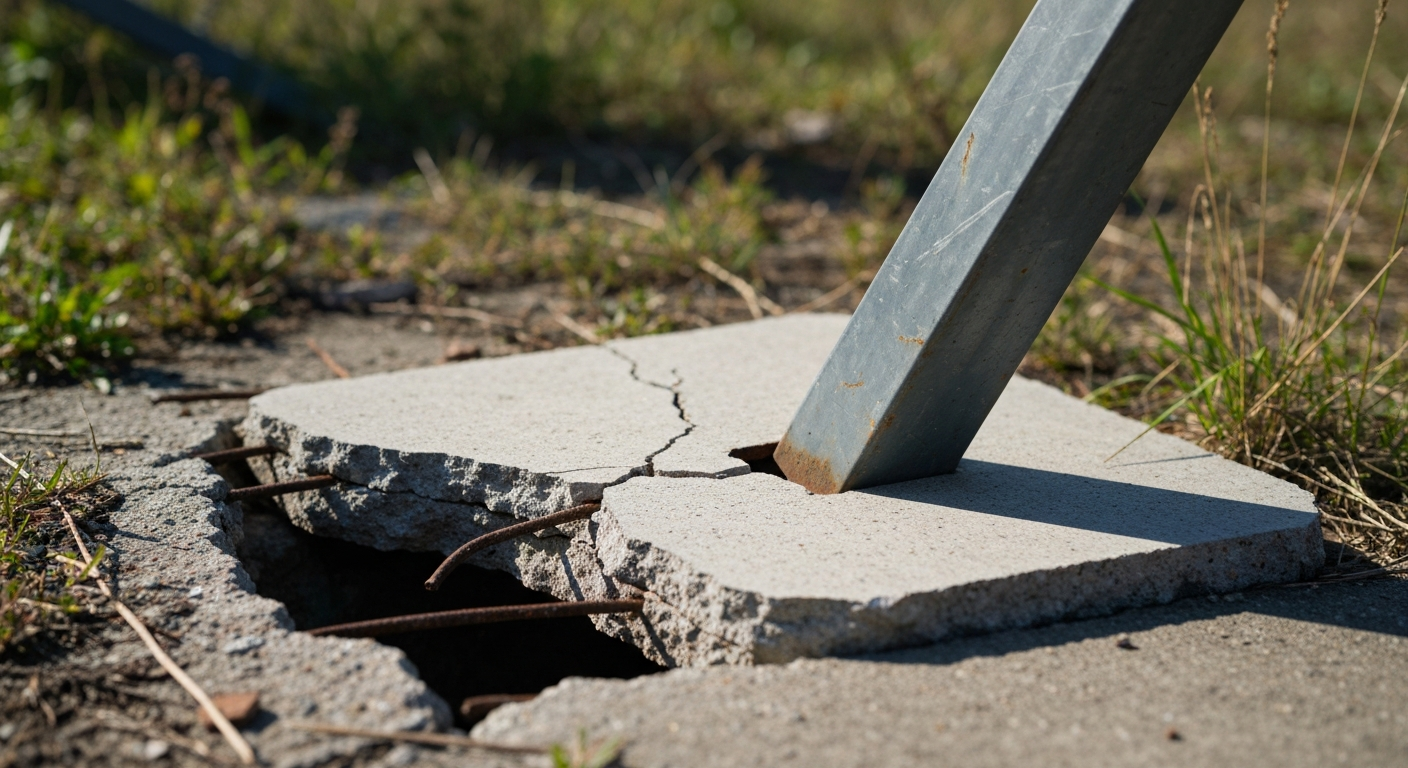
Rail rigidity appears subtle, yet it can make a dramatic difference. A versatile top rail connected with little hardware can enable the whole run to guide. A stiffer rail, effectively attached, decreases the bending minute transferred to blog posts and fasteners.
I have actually also discovered a pattern with plastic and comparable systems. Some installs look penalty at the beginning, however the connections are not made to take care of the wind bracing requirements at edges. The fencing holds, after that the links loosen just enough to begin a slow-moving drift. That drift speeds up due to the fact that as soon as panels change, wind loads move in a different way and bolts see brand-new anxiety angles.
Wind instructions and fence height change the supporting needs
A fence that is 8 feet tall acts differently than a four foot fence under wind. Elevation raises the area exposed to wind, which enhances lateral load. Bigger spans in between blog posts additionally boost deflection for the very same stiffness.
Also, fencings do not sit in best problems. Trees lost branches, surrounding structures channel wind, and open fields develop gusts that strike sideways. Bracing needs increase when wind is channelled or when the fence remains in a revealed location.
If your website is open, ask your fencing contractor how they change blog post spacing and supporting. A great fencing contractor does not deal with every backyard like the same math problem.
Common "looks great today" mistakes
Not every failing is significant at set up. Lots of problems hide up until the fence is under seasonal stress.
Fasteners and connections that loosen
Deck screws, wrong braces, small lag screws, weak connectors, and inadequate attachment patterns can create progressive loosening. As soon as a rail or panel link loosens up, the fencing can rack a bit. After that it racks a bit a lot more, since the system loses stiffness.
If a fencing professional extols materials yet rejects to define port equipment and attaching patterns, you need to beware. Securing and bracing are not just concrete and diagonals. They are additionally the stability of the connection points.
Overlooking article spacing
Too much spacing implies each blog post carries more period lots between it and the following message. Under lateral pressure, longer periods act like beam of lights. That raises deflection and transfers greater bending minutes to the blog posts and ground interface.
This is where experience programs. Every website has somewhat various wind exposure and soil behavior, yet some price quotes treat message spacing as a one-size-fits-all guideline. That shortcut turns up later.
Ignoring drainage
Water is the quiet opponent of anchoring. If water pools near the base of articles, it can deteriorate soil, boost freeze-thaw damage, and speed up rot where wood is entailed. Supporting can not fix a base that repetitively gets saturated.
A fence company that takes note of water drainage details, even tiny ones, tends to provide longer-lasting outcomes. That might indicate rating the location, adjusting post depth a little, or adding a crushed rock shoulder in particular soils where water collects.
Questions to ask so you can evaluate the style, not simply the price
If you are shopping for fencing contractors or attempting to maintain a fence company sincere, do not ask only "How deep will you establish posts?" Ask about the system.
Here are the most valuable questions, phrased in ordinary language:
- What is the prepare for end, corner, and entrance messages, and what does support look like at those locations?
- How will certainly you avoid racking along long straight runs, and what supporting method will certainly you use?
- What is the expected blog post spacing for my fence type and wind direct exposure, and why?
- How will certainly you handle drain around the blog post bases so water does not swimming pool near the ground line?
You ought to get the answer that explain components and lots courses. Vague actions like "we simply set them great" are not enough.
A fencing contractor who builds these systems every week will certainly speak naturally regarding rigidity, restriction, and the method loads move with rails and articles. They will likewise admit where judgment is called for, since problems vary.
A real-world circumstance: when supporting is skipped
A homeowner once called me after a fence setup failed in a solitary storm period. The fencing was cosmetically fine initially. Requirement messages were established in concrete, and the panels looked straight when the team left.
Then a solid wind came with. Within weeks, the fencing had a visible bow at one end section near an entrance. Eviction began dragging, which made individuals assume the joint side was the problem. The joint was not the origin. The whole run had actually racked a portion of an inch, after that an additional fraction, due to the fact that the end post and the links along the run were not braced for lateral force.
During repair, the distinction was obvious. Once the staff added angled restriction and strengthened the end condition with proper equipment, the fence actions transformed instantly. Instead of the fence relocating as a single versatile aspect, the framework withstood sidewards lots. The articles quit fighting the concrete and dirt alone. The rails and supporting brought their share.
This is the vital lesson: securing and bracing collaborate. You can overbuild one and still obtain failure if the various other component is weak.
Materials influence anchoring and supporting choices
Different fencing materials create various failing settings. That does not imply you can not construct them well, it means you have to create with the product's habits in mind.
Wood secure fencing typically stops working at the base because of rot and at links due to screw helping to loosen and movement. Metal secure fencing can corrode at ground call and can bend if bracing wants. Vinyl and some composite systems can crack or deform at connection points if they depend on versatile mounting without adequate restraint.
When a fencing company utilizes a "basic information" across multiple product kinds, it can miss these differences. Ask how the service provider adapts securing and supporting to the fencing product, not simply the style.
How to assess a proposal: seek the information that indicate stiffness
Prices vary, but excellent professionals explain what drives price: excavation, concrete usage, equipment top quality, and the added time for supporting at end conditions.
Here is what I seek when assessing bids, whether I am employing a fencing contractor or examining an issue:
- Specifics on message dimension, post spacing, and just how end and edge posts vary from line posts
- Clear mention of supporting members or reinforcement methods, especially near gates
- A plan for water drainage and blog post base security, not just "concrete listed below quality"
- Hardware requirements, not just "we make use of quality screws" or "we utilize galvanized brackets"
If those products are missing out on, the bid may still be convenient, however you are taking a wager. Securing and supporting are where concealed threat lives.
Practical trade-offs: what you obtain and what you pay for
There is no solitary "ideal" securing and bracing prepare for every lawn. The most effective strategy is the one that balances performance, appearances, and site constraints.
- Deeper or more robust anchoring can enhance stability, yet it adds excavation price and can be restricted by rock or inadequate access.
- Additional bracing boosts labor and can somewhat alter the appearance, particularly when diagonal participants are visible.
- Closer article spacing enhances stiffness, but it adds products and installment time.
An experienced fencing contractor need to aid you select trade-offs. As an example, if you have a fencing line that runs through exposed wind and reaches around an edge, bracing end conditions and edges may be greater top priority than making every post added heavy. If you have steady soil and a protected backyard, you may focus on proper base drainage and precise alignment as opposed to severe overbuild.
Maintenance becomes part of the anchoring and supporting story
Even a great set up is not "establish it and forget it" for life. Maintenance is typically what maintains a fence from developing into a repair work after 5 or 6 seasons.
The useful point is this: if connections loosen, supporting efficiency drops. If panels sag, loads transfer to various participants and the system ends up being less predictable.
You do not require constant job, however you must watch for the early signals:
- Small spaces that show up and grow between panels
- Rails that tilt or fasteners that look raised or popped
- Gate actions that transforms, especially dragging or misalignment
- Fresh stains at the post base, which can show water problems or surface area corrosion
When you deal with these early, you typically protect against the spiral where anchoring is forced to make up for lost bracing.
When repair work take place, believe in systems, not in patches
A typical mistake is to replace just what is noticeably broken, like swapping a couple of panels after storm damages. If the fencing racked, the underlying tightness issue stays. Posts might also be under stress at the base or the adjacent connections.
Repairs ought to think about lots courses. If the fence moved laterally, you normally require to recover supporting and tighten or replace the connection points that enabled the system to warp. In some cases you likewise require to change message base detailing, especially if water drainage transformed throughout the mount or after grading.
A fence company that comprehends anchoring and bracing will certainly come close to repair work as stablizing, not just replacement.
Final point to keep in mind: stiffness is the goal
Anchoring protects against activity at the base. Bracing protects against motion throughout the run. With each other, they keep the fence inflexible sufficient to withstand lateral loads.
If you keep that frame in mind, it becomes simpler to judge contractors. A fencing contractor who explains concrete positioning top quality, article embedment reasoning, drain, and supporting around ends and gateways is believing in systems. A fencing company that can just speak about appearance or common "deepness and spacing" is often skipping the part that in fact maintains your fence straight.
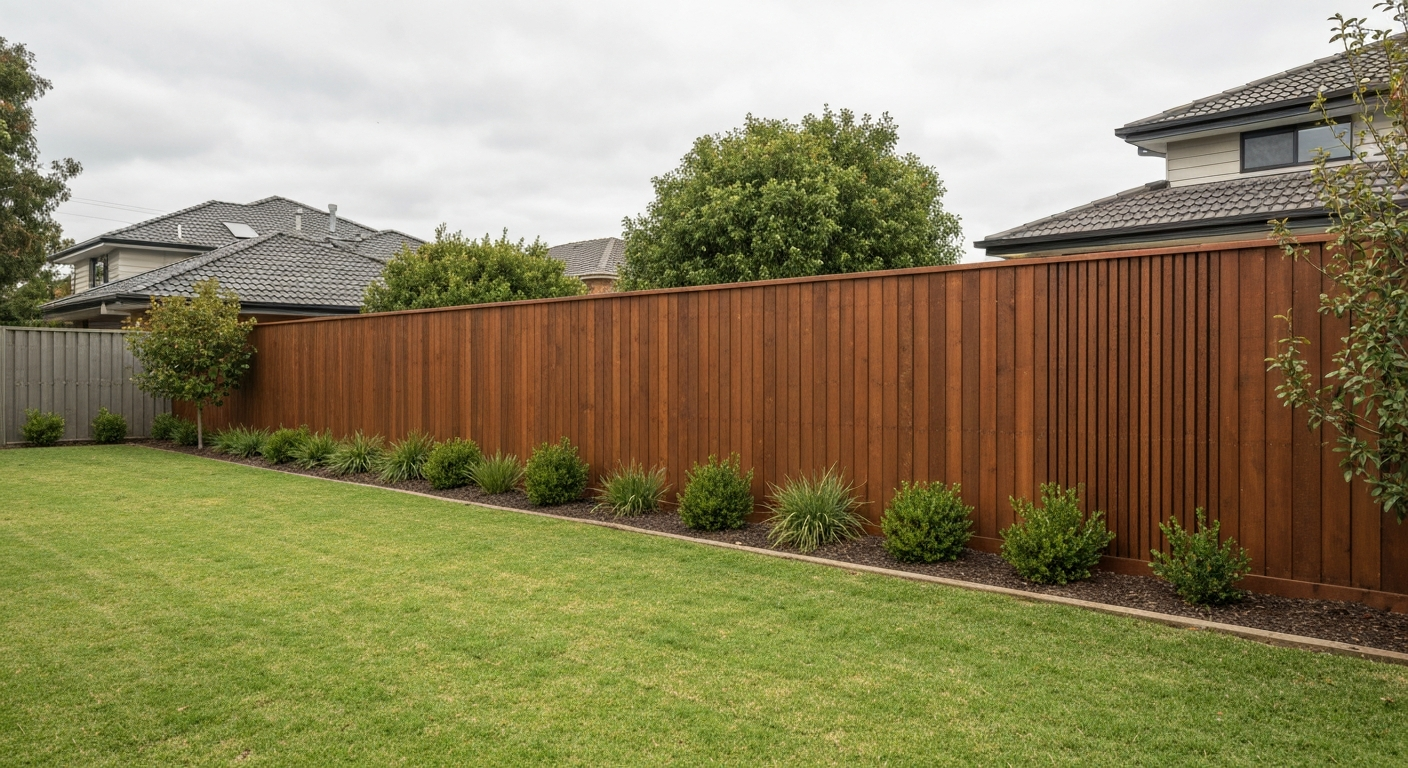
If you want a fencing that remains this way after wind and time, demand the information. The additional inquiries are not choosy. They are exactly how you safeguard your investment.
And when you comprehend anchoring and bracing, you can see it instantaneously when you stroll a line of fences. The ones that look confident have framework behind the panels. The ones that look unclear have actually been battling physics without the best restraint.